
The Gut-Brain Axis Explained: How Your Gut Bacteria Shape Brain Health
Part one of a three-part series on the gut-brain axis – the biology connecting your digestive health to your mood, focus, and long-term brain health.
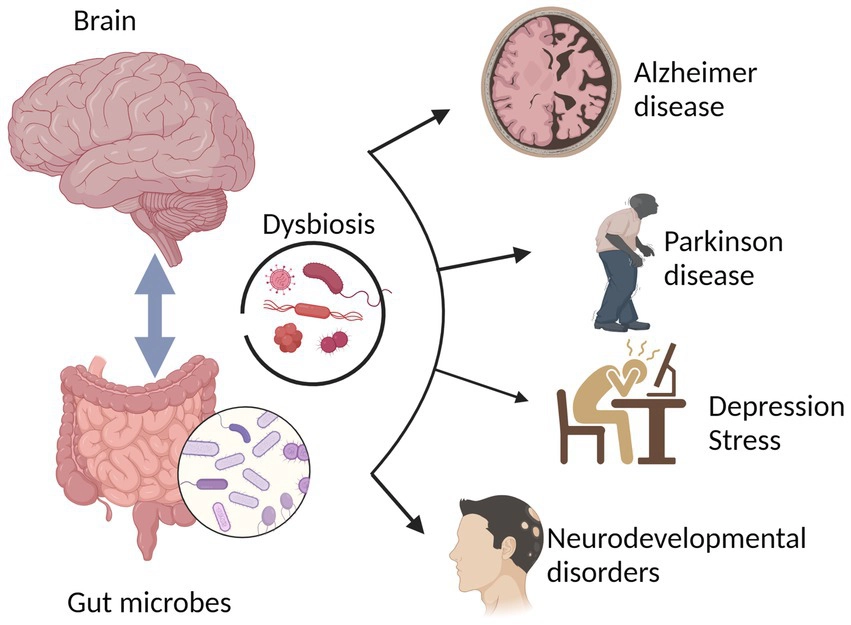
The gut-brain axis has become something of a buzz-phrase, which undersells it. Underneath the phrase is well-published biology: vagus nerve signalling, immune modulation, and bacterial metabolites that cross the blood-brain barrier and shape brain cells directly. This is active research, appearing in journals including Cellular & Molecular Immunology, Nature Neuroscience, and Pharmacological Research, and the direction of the evidence is consistent. Your gut is a constant, active participant in how your brain develops, functions, and ages, and gut health and mental health turn out to be far more entangled than most people realise.
This week I want to lay out the mechanics of the gut-brain connection: how the gut and brain are physically wired together, and how gut bacteria take part in the conversation. Part two goes deeper into mood specifically: the serotonin and psychobiotics story. Part three is the practical piece – what to actually eat to support it.
Your gut has its own nervous system (your “second brain”)
Your digestive tract runs its own nervous system, called the enteric nervous system. The stomach alone is estimated to contain 500 million neurons, sitting alongside a gut microbiome made up of trillions of bacteria, viruses, and other microbes. This is close to what people mean when they call the gut a “second brain.”
For a long time, the assumption was that communication ran mostly one way, from brain to gut, via stress and the nervous system, which is why anxiety upsets digestion. What has changed over the last decade is the recognition that gut bacteria are active signallers, not passive residents, and that traffic runs constantly in both directions.
“The gut and brain are in constant, bidirectional conversation, and gut bacteria have an active voice in it.”
The vagus nerve: the gut-brain axis’s direct line
The most literal connection in the gut-brain axis is the vagus nerve – the tenth cranial nerve, running from the brainstem down through the chest and wiring directly into the gut wall. It carries signals in both directions, as described in a 2025 review in Cellular & Molecular Immunology: sensory information about the gut travels up to the brainstem, while the brain sends signals back down that shape digestion, gut motility, and the composition of gut bacteria itself.
In animal studies, cutting the vagus nerve blunts the anxiety and low mood normally triggered by antibiotic-induced disruption of gut bacteria, and blunts the low mood driven by gut inflammation. Different bacterial strains have opposite effects through this same nerve: some strains promote anxious behaviour, others reduce it, depending on what they signal up the vagus nerve. This is why the vagus nerve and gut health are so often discussed together in the anxiety and mood research.
The messengers: short-chain fatty acids
Alongside the nerve wiring, there is a chemical signalling system. When gut bacteria ferment fibre, they produce short-chain fatty acids, mainly butyrate, propionate, and acetate. A 2022 review in Molecular and Cellular Endocrinology lays out how these molecules enter the bloodstream, travel to the brain, and cross the blood-brain barrier itself.
The blood-brain barrier is the tightly regulated boundary that normally shields the brain from whatever is circulating in blood. Short-chain fatty acids get through it, and they also help maintain it: gut bacteria are needed to produce the proteins that hold that barrier sealed, and animals raised with no gut bacteria at all show a measurably leakier blood-brain barrier. Short-chain fatty acids are also detectable at meaningful concentrations in human cerebrospinal fluid, not only in animal models.
How gut bacteria shape your brain’s immune cells
Microglia are the brain’s resident immune cells, responsible for clearing debris, pruning connections, and mounting the brain’s inflammatory response when needed. A landmark 2015 study in Nature Neuroscience found that mice raised with no gut bacteria at all had microglia that were structurally abnormal and functionally immature, with an impaired ability to respond to infection or injury in the brain. Restoring a normal, complex gut microbiome partially reversed this. Giving short-chain fatty acids directly, without the bacteria at all, was enough on its own to restore much of normal microglial structure and function.
The maturation of your brain’s own immune cells is, in part, under the control of what is fermenting in your colon.
Why diet is the lever in the gut-brain axis
The vagus nerve, short-chain fatty acids, and microglia all respond to what you eat. A 2025 review in Pharmacological Research maps how diet reshapes gut bacteria, their metabolites, and the downstream immune and epigenetic signalling covered above, in ways now being investigated as management strategies for neurological disease. That is the subject of part three in this series.
A note on the evidence: this isn’t only animal science. A 2024 systematic review of randomised controlled trials in Nutrients, covering 51 trials and more than 3,300 people, tested probiotic (“psychobiotic”) interventions directly in humans. More than half of the trials reviewed found a significant benefit for depression specifically, with more limited but promising signals for cognitive impairment, schizophrenia, and bipolar disorder. The mechanisms above explain how; trials like these are testing whether it holds up in practice.
If you want the broader picture on supporting gut health day to day, I’ve written about that here: Nurturing Your Gut: The Key to a Healthier You.
Signs your gut health may be affecting your brain
This foundation matters most if you recognise yourself in any of these:
- Brain fog, low mood, or anxiety alongside gut symptoms like bloating, reflux, irregular bowels that you suspect might be connected
- A family history of neurological or neurodegenerative disease, where gut-immune-brain signalling is increasingly implicated
- A preference for understanding the mechanism before the “what to eat” advice, the practical changes tend to stick better once you know why
- Plain curiosity about why gut health and brain health keep showing up in the same sentence lately
If SIBO is part of your picture, I’ve written more on that specific connection here: SIBO, Mental Health, and the Gut-Brain Axis.
Part two looks at what this means for mood specifically – serotonin, the microbiome, and the emerging evidence for “psychobiotics.” Part three is the practical piece – what to actually eat to support this system.
If anything here raises a question about your own gut or brain health, I’d be glad to talk it through.
Hannah Kaye – Nutritional Therapist · Functional Nutrition · Nutritional Psychiatry
Frequently asked questions
What is the gut-brain axis?
The gut-brain axis is the two-way communication network linking your digestive tract and your central nervous system, running via the vagus nerve, immune signalling, and metabolites produced by gut bacteria.
Can gut health affect brain fog, anxiety, or mood?
Yes. Gut bacteria produce short-chain fatty acids and other signals that reach the brain via the bloodstream and the vagus nerve, and disruption to these pathways is linked with brain fog, anxiety, and low mood in both animal and human studies.
What is the vagus nerve’s role in gut health?
The vagus nerve is the main direct nerve connection between gut and brain. It carries sensory information about the gut up to the brainstem, and carries signals back down that shape digestion, gut motility, and gut bacteria composition.
Does gut bacteria really influence brain immune cells?
Yes. Research shows that microglia, the brain’s resident immune cells, develop abnormally in animals with no gut bacteria, and that short-chain fatty acids produced by gut bacteria are enough to restore much of their normal function.
References
- Beyond the gut: decoding the gut–immune–brain axis in health and disease. Cellular & Molecular Immunology (2025).
- O’Riordan, K.J., Collins, M.K., Moloney, G.M., et al. Short chain fatty acids: Microbial metabolites for gut-brain axis signalling. Molecular and Cellular Endocrinology, 546, 111572 (2022).
- Erny, D., Hrabě de Angelis, A.L., Jaitin, D., et al. Host microbiota constantly control maturation and function of microglia in the CNS. Nature Neuroscience, 18, 965–977 (2015).
- Gut microbiota and well-being: A comprehensive summary of the special issue. Pharmacological Research (2025).
- Cui, J., et al. Effectiveness of Psychobiotics in the Treatment of Psychiatric and Cognitive Disorders: A Systematic Review of Randomized Clinical Trials. Nutrients, 16(9), 1352 (2024).