
The Carnivore Diet: Benefits, Limitations, and How to Do It Well
A neutral, evidence-based look at what the carnivore diet offers, where the research falls short, and how to approach it well if you’re following it or considering it.
The carnivore diet has moved from a fringe experiment to a full-blown cultural moment – the hashtag #carnivore has around 2.6 million posts on Instagram alone. People come to it from very different starting points: some are chasing weight loss, some are trying to get an autoimmune or gut condition under control after nothing else has worked, some simply prefer the simplicity of eating one category of food. Whatever brought you here, this isn’t going to be a piece telling you you’re wrong to try it, or that it’s the answer to everything either. I want to walk through what a proper review of the human evidence actually found, and what that means practically if you’re following this diet or thinking about it.
The anchor for this piece is a scoping review published in Nutrients in January 2026, which pulled together every human study on the carnivore diet that exists to date, following formal PRISMA guidelines. That detail matters: the researchers searched four databases and synthesised everything that met their criteria, rather than working from anecdote or personal experience. And the headline finding is worth sitting with before we go further – across that full search, only nine human studies on the carnivore diet exist. That’s the entire evidence base this diet currently has behind it.
What actually counts as “the carnivore diet”?
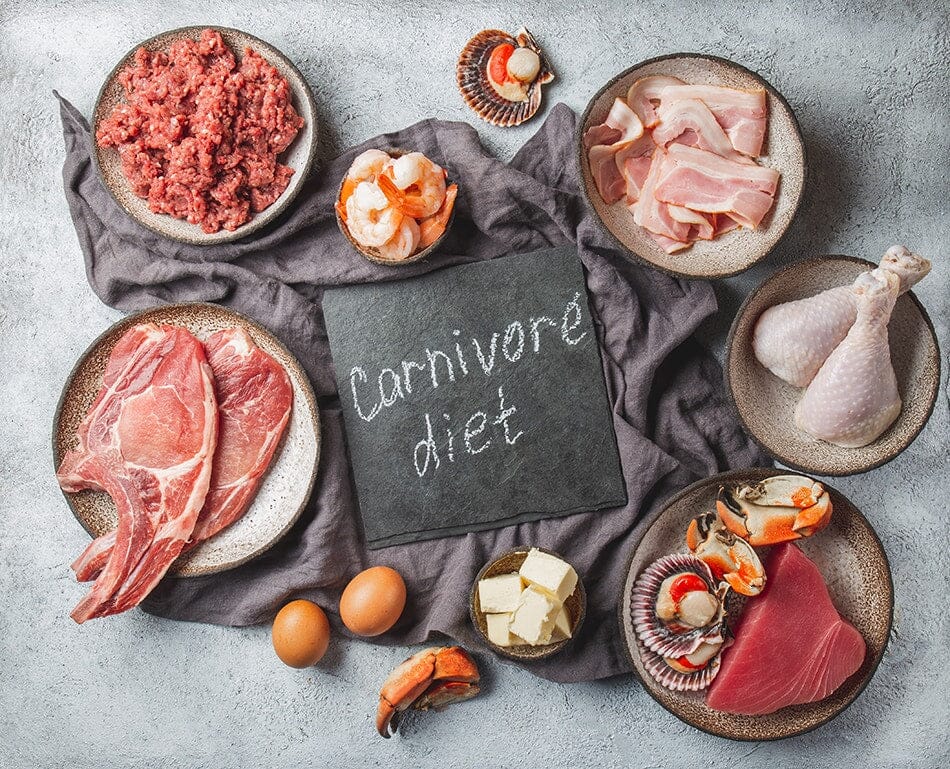
There’s no official, standardised definition, which is itself part of the story. In general terms, it means eating almost exclusively animal-source foods: meat (including organ meats), fish, seafood, eggs, animal fats, and sometimes full-fat dairy, with plant foods, carbohydrates, and processed products excluded entirely. Red meat usually forms the base. The strictest version, the “Lion Diet,” is red meat, salt, and water, nothing else. Depending on how much protein is eaten, the diet can push the body into ketosis, which places it within the broader low-carbohydrate, high-fat (LCHF) family that includes classic ketogenic diets.
What the carnivore diet offers
Reported improvements in how people feel. Across the surveys and case series in the review, a consistent pattern shows up: people following the carnivore diet self-report meaningful improvements in general health, satiety, sleep, and mental and physical wellbeing. In the largest study, a social media survey of 2,029 adults, respondents reported improvements across a wide range of chronic conditions, and some were able to reduce or stop medication, including for diabetes, alongside weight loss.
Some notable laboratory signals. In that same cohort, several markers moved in a favourable direction: CRP (a marker of inflammation) dropped, GGT (a liver enzyme) dropped, and the triglyceride-to-HDL ratio improved. In a separate case series, seven people with inflammatory bowel disease following a ketogenic carnivore diet reached clinical remission, with striking drops in faecal calprotectin, a clinically useful inflammatory marker for IBD, and improvements in anaemia. A standalone case report also described full, sustained remission of recurrent Candida vulvovaginitis and hidradenitis suppurativa on an all-meat ketogenic diet.
A nutrient-bioavailability argument worth taking seriously. Animal-source foods provide certain nutrients – retinol (true vitamin A), heme iron, and a full set of essential amino acids – in forms the body absorbs and uses more efficiently than their plant-based equivalents. Removing all plant foods also removes so-called antinutrients (phytic acid, lectins, oxalic acid, tannins), which in large amounts can interfere with mineral absorption. Meat also contains “carninutrients” like creatine, L-carnitine, taurine, and coenzyme Q10 that aren’t found in meaningful amounts anywhere else in the diet.
Ketosis itself may be doing some of the work. Several of the positive findings above may not be specific to carnivore eating at all, but to the ketogenic state it often produces. Beta-hydroxybutyrate, the main ketone body, has documented anti-inflammatory actions on immune cells, which may explain some of the IBD and skin-condition remissions.
A necessary caveat sits underneath all of this: none of these studies are randomised controlled trials. They’re social media surveys, case reports, and small case series with no control group, the kind of evidence that sits toward the lower end of the evidence-quality hierarchy. Belief in a diet’s benefits can itself drive real symptom improvement (a well-documented placebo effect), and people who go to the trouble of restructuring their entire diet tend to make other health-positive changes at the same time, which makes it hard to isolate what’s doing the work. Subjective, patient-reported outcomes still matter clinically, so these findings shouldn’t be dismissed, they’re best read as promising signals rather than settled findings.
Where the evidence falls short
The nutrient math doesn’t fully add up. Two of the studies in the review built detailed carnivore meal plans and checked them against official nutrient reference values. The shortfalls were consistent and specific:
| Nutrient | Recommended intake | Typical carnivore diet intake |
|---|---|---|
| Thiamine (B1) | 1.1–1.2 mg/day | 0.52–0.92 mg/day |
| Vitamin C | 45 mg/day | 1.2–33.2 mg/day |
| Magnesium | 310–420 mg/day | 135.8–203.1 mg/day |
| Calcium | 1000 mg/day | 76.2–840.1 mg/day |
| Dietary fibre | 25–30 g/day | Under 1 g/day |
| Iodine | 150 µg/day | 105.3–908.8 µg/day (highly variable) |
Vitamin A (retinol) was the exception in the other direction. Carnivore meal plans, particularly those including liver, substantially exceeded recommended intakes, which is its own consideration given how easily fat-soluble vitamin A can build up to problematic levels. As you’d expect, the stricter the version of the diet (fewer food groups – no dairy, no organ meat, no seafood), the wider these gaps become.
Cholesterol rises. This is one of the most reproducible findings across the entire evidence base. In the German cohort followed by Klement and Matzat, total cholesterol rose from a median of 224 mg/dL to 305 mg/dL, and LDL cholesterol from 157 to 256 mg/dL, both statistically significant increases. Other cohorts showed the same direction of change.
ApoB vs. LDL-C on a high-fat diet. Where this needs more nuance than “LDL went up, so risk went up” is in which marker actually tracks that risk best. LDL-C measures the cholesterol carried by LDL particles, not the number of particles themselves, and on a very high-fat, low-carbohydrate diet those two figures can diverge. A 2025 systematic review spanning 15 studies and over half a million participants found that ApoB, which directly counts the atherogenic particles, out-predicted LDL-C as a marker of cardiovascular risk in every study that compared them; European cardiology guidelines already recognise it as the more accurate measure for exactly this reason. The broader question of how much saturated fat itself drives cardiovascular risk, independent of the LDL-C it raises, is also still unsettled in the research, which is part of why the marker you check matters as much as the fact that a number went up. There’s also a recognised “lean mass hyper-responder” phenotype – lean, metabolically healthy people whose LDL cholesterol rises sharply on low-carbohydrate diets despite otherwise favourable markers, sometimes including a relatively unremarkable ApoB – though it’s not yet clear how many carnivore dieters fall into this category versus a more concerning pattern. None of this is a reason to dismiss a rising LDL-C; it’s a reason to ask for ApoB alongside it. This is the single strongest reason to track lipids properly if you’re following this diet, rather than assuming the diet’s other benefits mean cholesterol doesn’t matter.
The often-cited traditional-diet comparisons don’t hold up as cleanly as they’re presented. The Inuit and the Maasai are frequently invoked as proof that an animal-based diet can support good long-term health. Both groups do show some favourable outcomes, but both also show documented downsides when looked at properly: documented micronutrient deficiencies, high rates of anaemia, and shorter overall life expectancy in the Maasai; and outcomes in both groups shaped as much by genetics, extreme physical activity levels, and (in the Maasai’s case) chronic caloric restriction as by diet composition alone. Neither comparison transfers cleanly to a sedentary, modern context, so they’re weaker evidence for long-term safety than they’re often presented as being.
It can carry a social cost. One survey found that people following a zero-carbohydrate or carnivore diet frequently experience friction with family, friends, and healthcare providers. This was enough, in some cases, that social pressure led people to eat plant foods against their own dietary intentions just to manage a situation. It’s a commonly reported enough cost of the diet to name directly, especially if you’re supporting someone through it.
The evidence quality itself is the biggest limitation. Using the standard NHMRC grading system, every study included in the review sits at Level III or IV, the lower tiers of evidence quality. Small samples, no control groups, short follow-up periods, and self-selected, health-motivated participants (people who feel worse on the diet are less likely to still be following it, or answering a survey about it, months later). None of the nine studies measured a hard clinical endpoint like a heart attack, a fracture, or a cancer diagnosis, and none ran long enough to speak to long-term safety with any confidence.
The environmental footprint is significant. A diet built almost entirely around animal products – more so than a standard omnivorous diet – carries a substantially larger carbon and land footprint than plant-forward eating patterns. This doesn’t bear on anyone’s personal health, but it’s a trade-off worth being aware of if sustainability is something you weigh in your own decisions.
How to do it well, if you’re following it
The review’s own conclusion is a fair, balanced one, and it’s worth reflecting its spirit directly: the carnivore diet may produce meaningful short-term benefits for some people, especially around satiety, weight, and – in specific cases – inflammatory or autoimmune symptoms that hadn’t responded to anything else. At the same time, it carries clear, measurable limitations: micronutrient shortfalls, rising LDL cholesterol and total cholesterol, and essentially zero fibre intake. The current evidence doesn’t support a blanket recommendation for long-term use, nor does it support ruling the diet out for everyone. Where you land probably depends on what you’re using it for, how you’re built metabolically, and how it’s monitored.
The practical takeaway is monitoring and completeness, not abandonment:
- Regular bloodwork that includes a full lipid panel – ideally with ApoB, which tracks cardiovascular risk more precisely than LDL alone – particularly if you were metabolically healthy going in.
- Attention to vitamin D and iodine status specifically, since these are easy to overlook and don’t announce themselves with obvious symptoms.
- Deliberately including organ meats, dairy, and seafood rather than muscle meat alone, to close as many of the nutrient gaps above as you reasonably can.
- If you have an inflammatory bowel condition, a personal or family history of cardiovascular disease, or you’re pregnant, this is a diet worth approaching with clinical support rather than alone, given how much closer the monitoring needs to be in those situations.
The APOE4 wrinkle: why genotype matters here. If you have a personal or family history of dementia or Alzheimer’s disease, it’s worth knowing your APOE genotype before committing to this diet’s saturated fat load long term. A 2024 cohort study following 3,360 people for close to eight years found that in APOE-ε4 carriers specifically, every 5% increase in calories from saturated fat was linked to 21% faster cognitive decline – an association that didn’t hold at all in non-carriers. The same study found long-chain omega-3s were protective specifically in ε4 carriers, which makes the fatty fish in the meal plan below more than a nice-to-have if that applies to you.
If a lower-carbohydrate approach appeals to you but you’d rather not remove plant foods entirely, I’ve written before about how a well-formulated ketogenic diet – built around olive oil, fish, and lean meats rather than saturated fat, with the fibre still intact – interacts very differently with the gut microbiome: The Ketogenic Diet and the Microbiome: Busting Myths and Unveiling Benefits. And if the near-total absence of fibre in the carnivore pattern gives you pause, I’ve written specifically about why fibre and fermented foods matter for gut and mood health here: The Gut-Brain Axis Diet: What to Eat for Gut and Mental Health.
A sample one-day carnivore meal plan
Think of this as illustrative rather than prescriptive: it shows what a more nutrient-complete version of the diet looks like in practice, built deliberately around the specific gaps identified above, rather than muscle meat alone.
- On waking: A mug of salted bone broth (a simple way to get sodium and fluid in early, which matters more on this diet than people expect).
- Breakfast: Three to four eggs cooked in butter or tallow, with a small portion (60-90g) of pan-seared beef or chicken liver. Liver is one of the few carnivore-compliant sources of folate and vitamin C, but keep the portion modest, since its vitamin A content is very high and easy to over-consume.
- Mid-morning: A serving of full-fat plain kefir or a hard cheese like cheddar, if dairy agrees with you – this is one of the more practical ways to close the calcium gap on this diet.
- Lunch: A fatty cut of red meat (ribeye, or ground beef with the fat left in), well salted.
- Afternoon: A tin of sardines or oysters – oysters in particular are one of the few concentrated sources of iodine and zinc available on this diet.
- Dinner: Grilled salmon or another fatty fish, alongside a smaller portion of red meat if you want it, salted to taste.
- Throughout the day: Water with a pinch of added salt, particularly if you’re new to the diet – the drop in insulin and glycogen-associated water retention on a very low-carbohydrate diet increases sodium loss, and under-replacing it is the main driver of the fatigue and headaches sometimes called “keto flu.”
The strictest version of this diet – the Lion Diet, which is beef, salt, and water only – would fall short on essentially every nutrient in the table above, since it excludes liver, dairy, eggs, and seafood entirely. If you’re going to follow a carnivore diet for any length of time, the version that includes organ meat, dairy, and seafood is a meaningfully more complete one than beef alone.
Frequently asked questions
Is the carnivore diet safe?
Based on the current evidence, this remains an open question. Documented benefits and documented risks both exist – rising cholesterol and specific nutrient shortfalls chief among the risks – and the evidence base is too small and too short-term to give a confident answer for everyone, particularly for long-term use. That’s why monitoring matters more here than it would on a more established dietary pattern.
Does the carnivore diet cause nutrient deficiencies?
It can, particularly for vitamin C, vitamin D, thiamine, magnesium, calcium, iodine, and fibre – all of which fall below recommended intakes in modelled carnivore meal plans, especially stricter, beef-only versions. Including organ meats, dairy, and seafood narrows several of these gaps but doesn’t close all of them.
Does the carnivore diet raise cholesterol?
In most published cohorts, yes – total cholesterol and LDL cholesterol both rise, often significantly, especially in people who were metabolically healthy before starting. A smaller subset of lean, low-carbohydrate dieters show a different pattern (the “lean mass hyper-responder” phenotype) where LDL rises without other markers of cardiovascular risk worsening, but this doesn’t appear to describe everyone on the diet.
What is ApoB, and why does it matter more than LDL-C on the carnivore diet?
ApoB is a blood marker that directly counts the number of cholesterol-carrying particles in circulation, rather than just measuring the cholesterol they contain, which is what LDL-C does. On a very high-fat diet, the two numbers can diverge, and a 2025 systematic review found ApoB out-predicted LDL-C as a marker of cardiovascular risk in every study that compared them. If you’re following this diet, asking for ApoB alongside your standard lipid panel gives a more complete picture than LDL-C alone.
Does the carnivore diet affect people with the APOE4 gene differently?
It may, specifically around cognitive health. A 2024 cohort study found that in APOE-ε4 carriers, higher saturated fat intake was linked to significantly faster cognitive decline, an association that didn’t hold in non-carriers. This doesn’t mean the diet is unsafe for everyone’s brain, but it’s a testable, evidence-backed reason people with a family history of dementia or Alzheimer’s may want to know their genotype before committing to a high-saturated-fat diet long term.
Can the carnivore diet help with autoimmune or gut conditions?
Case reports and small case series describe symptom remission in inflammatory bowel disease and some skin conditions, and some of this may be linked to the anti-inflammatory effects of ketosis itself rather than being carnivore-specific. This is promising but still based on uncontrolled case series, not clinical trials, so it’s best tried with medical support rather than as a first-line, unsupervised approach.
What is the Lion Diet?
The Lion Diet is the strictest version of the carnivore diet: red meat, salt, and water, with nothing else included – not even eggs, dairy, or other meats. It’s the version most likely to fall short on the nutrients discussed above.
If you’re curious whether an approach like this fits your own health picture, particularly if you’re managing a gut or inflammatory condition, I’d be glad to talk it through.
Hannah Kaye: Nutritional Therapist · Functional Nutrition · Nutritional Psychiatry
References
- Lietz, A., Dapprich, J., Fischer, T. Carnivore Diet: A Scoping Review of the Current Evidence, Potential Benefits and Risks. Nutrients, 18(2), 348 (2026).
- Lennerz, B.S., Mey, J.T., Henn, O.H., Ludwig, D.S. Behavioral Characteristics and Self-Reported Health Status among 2029 Adults Consuming a “Carnivore Diet”. Current Developments in Nutrition, 5(12), nzab133 (2021).
- Goedecke, S., Murphy, T., Rush, A., Zinn, C. Assessing the Nutrient Composition of a Carnivore Diet: A Case Study Model. Nutrients, 17(1), 140 (2024).
- Klement, R.J., Matzat, J.S. Subjective Experiences and Blood Parameter Changes in Individuals from Germany Following a Self-Conceived “Carnivore Diet”: An Explorative Study. Cureus, 17(4), e82521 (2025).
- Norwitz, N.G., Soto-Mota, A. Case report: Carnivore-ketogenic diet for the treatment of inflammatory bowel disease: A case series of 10 patients. Frontiers in Nutrition, 11, 1467475 (2024).
- Seidelmann, S.B., Claggett, B., Cheng, S., et al. Dietary carbohydrate intake and mortality: A prospective cohort study and meta-analysis. The Lancet Public Health, 3(9), e419–e428 (2018).
- Sehayek, D., Cole, J., Björnson, E., et al. ApoB, LDL-C, and non-HDL-C as markers of cardiovascular risk. Journal of Clinical Lipidology, 19(4), 844–859 (2025).
- Maki, K.C., Dicklin, M.R., Kirkpatrick, C.F. Saturated fats and cardiovascular health: Current evidence and controversies. Journal of Clinical Lipidology, 15(6), 765–772 (2021).
- Liu, X., Beck, T., Dhana, K., et al. Dietary fats and the APOE-e4 risk allele in relation to cognitive decline: A longitudinal investigation in a biracial population sample. The Journal of Nutrition, Health & Aging, 28(5), 100211 (2024).